The Huichol Peyote Ritual
- sidlerp
- Nov 19, 2024
- 2 min read
Updated: Dec 6, 2024
“The lifetime purpose of these journeys is to achieve a connection to, and the goodwill of Our Ancestors as well as the ability to perceive them, which the Huichol describe as nierika: to gain insight into the sacred and enter the realm of its perception. The ultimate end is to achieve a spiritual presence as an example to one’s descendants in this realm, and to become an ancestor after death.” (Johannes, 2002)
Formal Aspects:
The oldest sacramental use of peyote in North America is considered to be the peyote pilgrimage of The Huichol. Huichol peyote ceremonies incorporate sacred songs, symbolic offerings, and pilgrimages. These rituals involve mara'akame (shamans), who guide participants in seeking visions and divine blessings. This ceremony is a sacred ritual deeply rooted in their spiritual and cultural traditions.
Participants set off on a 300+ mile journey from Jalisco to San Luis Potosi, wearing traditional, elaborately decorated clothing that reflects their spiritual beliefs and cultural identity. Their clothing often includes white tunics and pants embroidered with vibrant patterns representing nature and sacred symbols like deer, maize, and peyote. These motifs are not merely decorative but carry spiritual significance, connecting the wearer to divine forces.
Men wear wide-brimmed straw hats adorned with eagle feathers, beads, and ribbons, symbolizing their connection to the heavens. Women's skirts and blouses are similarly embroidered with meaningful designs.


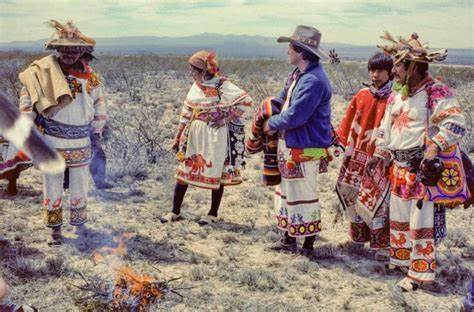
Both men and women accessorize with necklaces, bracelets, and anklets made of beads and seeds, believed to offer protection and spiritual power. These garments transform the ceremony into a living tapestry of Huichol mythology, blending artistry with devotion.
As seen in the video, the peyote ceremony begins with a pilgrimage to the sacred desert of Wirkuta, where participants collect Hikuri (peyote), a cactus believed to embody divine energy.

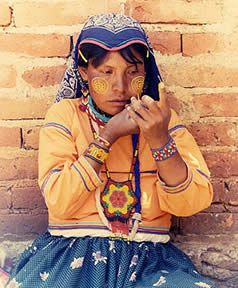
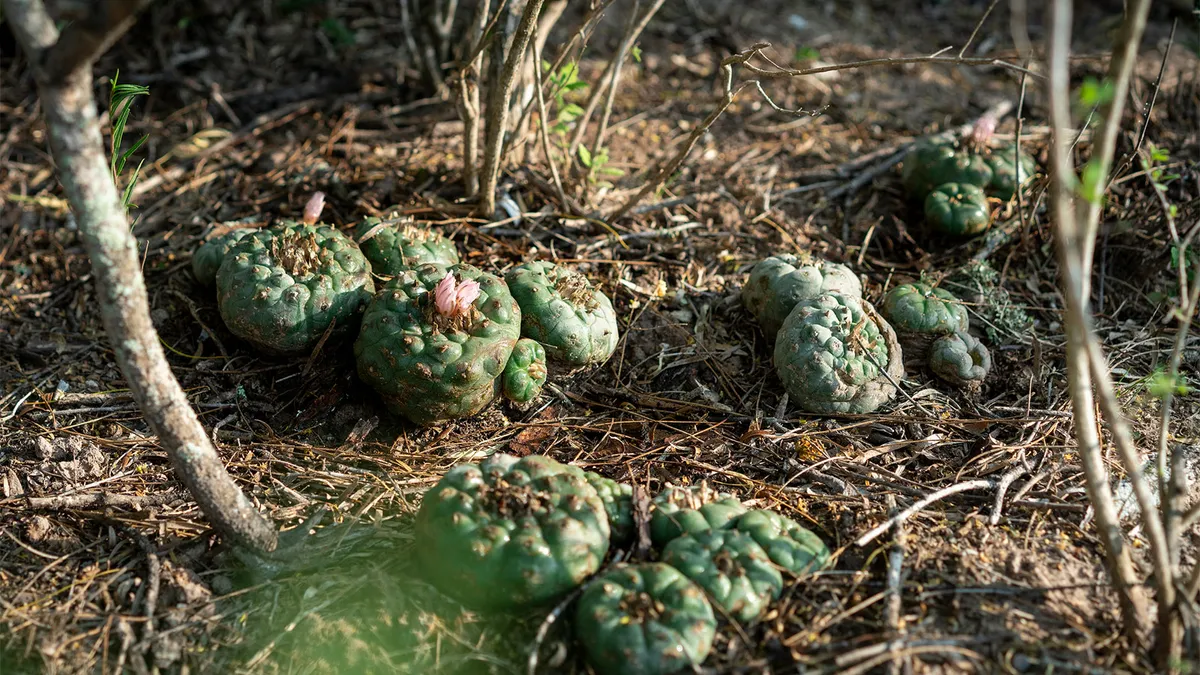
On their journey East, they acquire yellow face pigment and paint their faces as they approach the "land where the Ancestors paint yellow designs on our faces," Wirikutá, where they will hunt peyote.
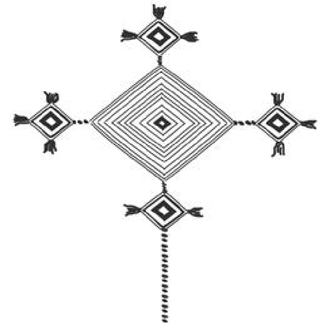
Guided by a shaman (mara'akame), the ceremony involves chanting, storytelling, and offerings such as maize, deer, and symbolic objects like "god's eyes" (Sikuli) as seen below.



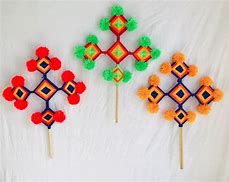
Through consuming peyote, participants seek visions, connect with their ancestors, and reaffirm their bond with the natural world. This ritual symbolizes a harmonious cycle of life, balancing human, ecological, and spiritual elements. (Lumholtz, 1903)
Cultural Context:
These practices represent the Huichol's dedication to spiritual growth and ecological harmony, reflecting a worldview where every aspect of life is interconnected with the sacred.


Comments